A Pantry Supper Built Around One Open Jar
Build a pantry supper around one open jar by pairing its flavor with useful staples, then tasting before you add salt, acid, heat, or more sauce.
What can you make for supper with the half-used jar already in your refrigerator? A pantry supper built around one open jar starts with that ingredient’s flavor and texture, then adds a staple that can carry it and a few ingredients that make the plate feel complete. The jar is a starting point, not a recipe or a reason to use everything at once.
What can an open jar tell you?
Before choosing the rest of the meal, look at what is in the jar and what it brings: salt, acidity, sweetness, fat, heat, savory depth, crunch, or a concentrated aroma. These qualities affect how much of it you need and what else the meal may need.
A spoonful of olives or capers, for instance, can season a whole pan of beans. A mild tomato sauce may need garlic or herbs to give it definition. Peanut butter contributes fat and richness, while salsa can supply acidity, chile, and fresh-tasting aromatics in one go.
Check the jar’s condition and follow its label for storage and use. If its contents look or smell unusual, or you are uncertain whether they are safe to eat, discard them rather than trying to rescue the meal.
Which staple should carry the flavor?
Choose a base that can take on the jar’s flavor without competing with it. The easiest options are often already-cooked or quick-cooking staples: canned beans, cooked rice, pasta, bread, eggs, tortillas, or a potato you can cook while you prepare the rest.
- For salty or briny jars: Pair capers, olives, anchovies, or preserved lemons with potatoes, beans, eggs, or unsalted grains.
- For thick, rich jars: Use nut butter, pesto, or tahini with noodles, chickpeas, toast, or vegetables.
- For bright, saucy jars: Salsa, curry paste, or tomato sauce can coat beans, rice, pasta, or eggs.
- For sweet-tart jars: Chutney or fruit preserves can balance a simple grain bowl, a cheese sandwich, or roasted vegetables.
Think of the staple as a plain piece of toast beneath a bold spread: it gives the strongest flavor somewhere to land. If your base is already seasoned, choose a smaller amount of the jar and taste before adding anything else.
What makes the meal feel complete?
Add one or two supporting ingredients for contrast rather than building a long list of extras. A soft or saucy base may benefit from something crisp, such as cabbage, a fresh apple, or toasted breadcrumbs. A rich sauce can feel lighter with greens, a squeeze of lemon, or a spoonful of plain yogurt. A mild bowl may welcome a fragrant finish, such as scallions, parsley, or black pepper.
Use what is on hand, but give each addition a job. Ask whether it brings texture, freshness, aroma, or a useful contrast. If an ingredient does none of those things, leave it out. A focused supper often tastes clearer than one assembled from every leftover in reach.
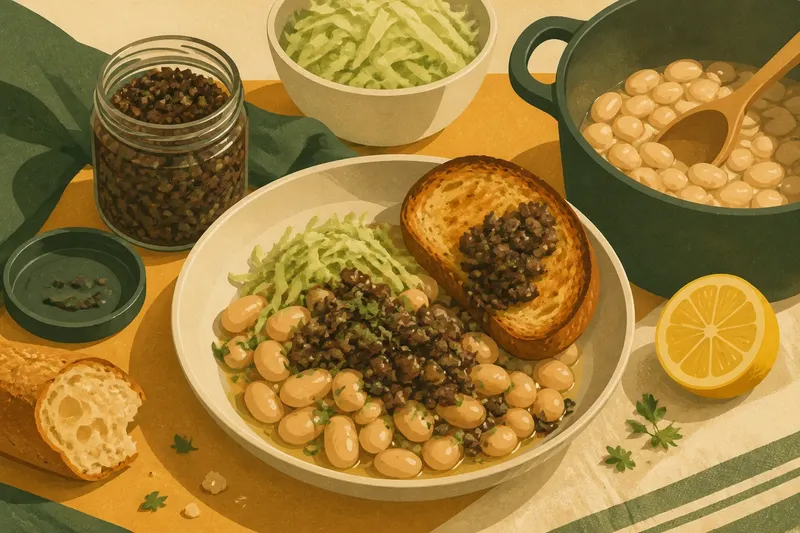
Say you have an open jar of olive tapenade, canned white beans, and a heel of bread. You could warm the beans with a splash of water, spoon in a little tapenade, and serve them on toasted bread with sliced cabbage or any crisp green vegetable. The expected result is a savory, briny topping with a softer base and a fresh crunch; tasting the beans before adding salt tells you whether the tapenade has already done enough.
How should you adjust seasoning?
Combine the jar with the base first, then taste a bite containing both. A spoonful of sauce alone can seem intense, while the same amount spread across beans or noodles may taste balanced. Check the whole bite before deciding what it needs.
Adjust in small increments and taste again after each change. If the food seems flat, try a little acid, such as lemon juice or vinegar. If it is too sharp, a modest addition of fat or a plain staple may soften the edge. If it feels heavy, add something fresh or crisp. Add salt only when the dish actually tastes underseasoned; salty jars, cheese, cured foods, and packaged broth can already contribute plenty.
Heat deserves the same restraint. Chile paste, hot sauce, and spicy salsa can become more noticeable as they spread through a dish. Begin with less than you think you need, mix thoroughly, and taste before adding another spoonful.
When can you add the jar during cooking?
Timing depends on the ingredient. A sturdy tomato sauce or curry paste can often be warmed with beans or vegetables so its flavor spreads through the food. A delicate herb sauce, pickled vegetables, chutney, or crunchy condiment may taste fresher when added near the end or at the table.
If you are unsure, divide the jar’s role: stir a little into the base, then keep a small amount aside for serving. That lets you judge the cooked flavor before adding more. For ingredients with specific handling or heating directions, follow the package instructions.
What questions help you choose the next move?
Can I use the brine or oil from the jar?
Sometimes: a small splash of olive brine, pickle brine, or seasoned oil can carry flavor into beans, dressing, or a pan sauce. Taste it first, since it may add substantial salt, acidity, or richness.
What if the jar is too strong on its own?
Spread it across more plain food instead of trying to cover its intensity with several competing flavors. Beans, rice, potatoes, pasta, and bread can dilute a concentrated sauce while still making it part of the meal.
Can I combine two open jars?
You can, but start by checking that they serve compatible roles. A spoonful of pesto and a small amount of tomato sauce may work with pasta, while two salty condiments can crowd each other and leave little room for adjustment.
How do I know when the supper is finished?
Stop when the main bite tastes balanced and has enough contrast to stay interesting. You do not need to use the entire jar or add a garnish if the meal already feels complete.
How can you make the next jar easier to use?
After supper, note the ingredient and a pairing that worked, such as “chutney with chickpeas” or “pesto on white beans.” Keep the note brief and descriptive; it is a prompt for your next decision, not a fixed recipe. When you build a pantry supper around one open jar again, choose the staple first, add only the supporting contrast the food needs, and let the final taste—not the label’s flavor claims or your guess—decide the seasoning.