Why Pickling Changes a Food’s Taste and Texture
Why pickling changes a food’s taste and texture: follow a simple tasting timeline to understand how acidity, time, and the ingredient shape each bite.
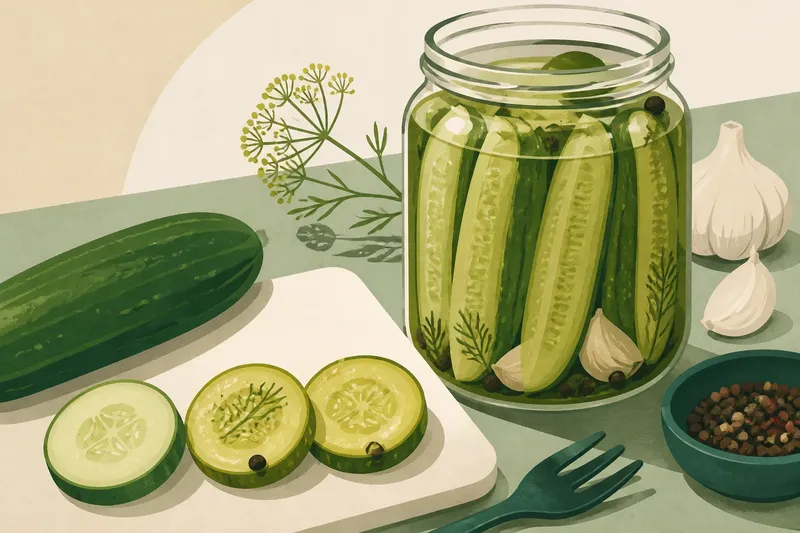
Why pickling changes a food’s taste and texture becomes clear when you taste the same cucumber before brining, shortly after it goes into the jar, and later in the refrigerator. The first bite is mostly cucumber; the next has a sharp, seasoned surface; with more time, the sourness and salt become more noticeable throughout. That change is not a single effect of “the pickle.” It comes from the acidic liquid meeting a particular food over time.
A simple tasting schedule can make those interactions easier to notice. It also helps separate a culinary change in flavor and texture from a broad claim that pickling makes any food shelf-stable. Keep the comparison small, use one ingredient, and treat each tasting as an observation rather than a preservation test.
What changes first after food enters the pickling liquid?
At the start, the liquid coats the outside of each piece. Its acidity may make the first bite taste bright or tart, while salt, sugar, garlic, dill, peppercorns, or other seasonings add their own impressions. The ingredient’s natural flavor remains present, but the contrast can make it seem milder, sharper, sweeter, or more aromatic.
For a quick pickle stored in the refrigerator, flavor develops as the liquid and food spend time together. This is not a switch that flips at a precise moment. Thin slices usually take on the liquid sooner than thick chunks because more cut surface is exposed. A dense carrot and a tender cucumber can also respond differently in the same jar.
Texture changes alongside flavor, but it does not follow a universal timetable. A crisp vegetable may soften as it sits, while a firmer piece can retain a distinct crunch. The outcome depends on the food’s structure, how it was cut, the liquid, and the storage conditions. So “more pickled” does not automatically mean “better.”
How can you taste the changes over a week?
Use a refrigerator pickle made with a recipe intended for refrigerated storage, and do not treat this tasting routine as a canning process. Pick one vegetable, such as cucumber or carrot, and cut it into pieces of similar thickness. Place the pieces in a clean, suitable container and add the prepared pickling liquid according to the recipe. Keep the container refrigerated.
- Before brining: Taste a plain piece. Notice its baseline flavor, firmness, and the way it breaks when you bite it.
- After cooling and initial chilling: Taste a piece when the recipe’s directions allow. Focus on the surface: does it taste more acidic or seasoned than the center?
- On the next day: Compare another piece with the first tasting. Look for a shift in sourness, saltiness, aroma, and crunch rather than expecting a single “finished” taste.
- Later in the week: Taste again if the recipe’s storage guidance permits. Ask whether the flavor is more even and whether the texture still suits the way you plan to serve it.
Use a clean utensil each time, and do not return a tasted piece to the container. Follow the recipe’s storage and discard directions. If the food looks or smells unexpectedly abnormal, do not taste it to investigate.
Say you make carrot coins and cucumber spears in separate jars with the same prepared liquid. The coins may taste seasoned through sooner, while the thicker spears retain a fresher center. That observation can help you choose a cut for your next batch; it does not establish a safe storage period or show that one food is preserved in the same way as the other.
Why do the same liquid and timing produce different results?
The food itself is part of the process. A watery vegetable, a dense root, and a soft fruit differ in structure and natural flavor. Cutting changes how much of that structure is exposed. A thin slice offers the liquid more contact than a large wedge, much as a sponge’s cut edge takes on a spill more readily than its smooth outer surface.
Acidity provides the sour impression, but the overall flavor is a balance. Salt can make flavors seem more rounded or pronounced; sugar can soften the perception of sharpness; spices contribute aromas that may become easier to notice as they mingle with the food. Changing one ingredient at a time makes it easier to identify what you prefer.
Temperature matters to the pace and context of the change, which is why refrigerator-pickle recipes specify chilled storage. The recipe’s proportions and handling instructions also matter. Do not assume that a liquid used for one vegetable, cut, or storage method automatically suits another.
Does a sour taste mean the food is preserved?
No. A sour flavor describes what you perceive on your tongue; it does not tell you whether a food is safe to store at room temperature or how long it can be kept. Quick refrigerator pickles are a culinary preparation with refrigeration requirements. Canning and other preservation methods rely on specific, validated procedures, not simply on adding an acidic ingredient or waiting for a sharper taste.
Use a tested recipe designed for the exact preservation method you intend to use. For canning, follow the recipe’s specified ingredients, container, processing directions, and storage guidance rather than improvising with proportions or timing. If those instructions depend on a product label, manufacturer directions, or local requirements, check the relevant guidance or ask a qualified food-preservation professional.
What do people ask about pickled flavor and texture?
Why do thin slices taste pickled sooner?
Thin slices expose more cut surface relative to each piece, so the liquid can affect them sooner than a thick chunk. The exact timing still depends on the ingredient and recipe, so use tasting as a flavor check, not as a measure of preservation.
Can pickles stay crunchy?
They can retain a crisp bite, but the result varies with the food, cut, recipe, and time in storage. Choose a firm ingredient and follow a recipe that addresses texture if crunch is your priority.
Why does a pickle taste sharper after sitting?
As the liquid’s flavors mingle with the food, sourness and seasoning may become more noticeable or more evenly distributed. Your impression can also change as the food softens, so taste and texture are worth considering separately.
Can I adjust a canning recipe to make it less sour?
Do not change the acid, ingredient proportions, or processing directions in a canning recipe based on taste preference. For a milder flavor, choose a tested recipe designed for that result or serve the preserved food with other ingredients.
How should you use what the tasting tells you?
Let the intended dish guide your preference. A sharply sour slice may suit a rich sandwich, while a milder piece may work better alongside delicate food. If you want a more even flavor, consider a thinner cut or a longer refrigerator-pickling period only within the recipe’s guidance. If crunch matters most, focus on the ingredient and texture instructions rather than chasing stronger sourness.
Keep notes in plain language: “bright at the edge, mild in the middle” or “still crisp, garlic prominent.” Those descriptions are more useful for refining a future batch than calling it simply good or bad. For why pickling changes a food’s taste and texture, the practical lesson is to judge flavor, bite, and preservation claims as separate questions—and let each answer come from the right kind of evidence.