Whole Spices or Ground: Choosing for Aroma and Convenience
Whole spices or ground? Compare aroma, storage, texture, and prep so you can choose a spice form that suits the dish and the time you have.
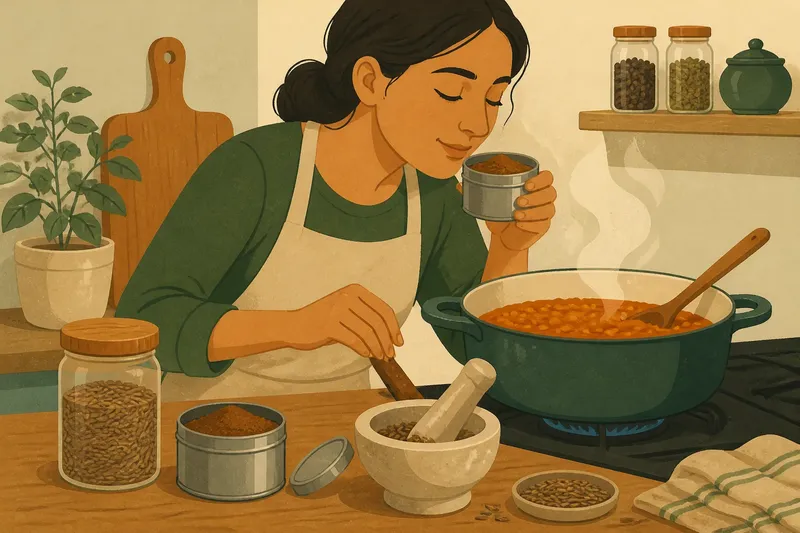
Whole spices or ground—which form suits the dish you’re making? If lentils are already simmering and the recipe needs cumin, ground cumin is ready to stir in; whole seeds need crushing or a place in the cooking oil. Choose based on the spice’s role, the texture you want, and the preparation you have time for.
Imagine you have a jar of cumin seeds, a tin of ground cumin, and lentils simmering. You want a quick seasoning, so you smell both containers, find that each has a distinct cumin aroma, and stir in the ground spice. The immediate result is an evenly distributed seasoning without extra grinding; save the seeds for a dish where their texture or toasted aroma fits.
What changes when a spice is whole?
Cracking or grinding a spice exposes more of it to air, so its aroma can change during storage. That makes intact spices useful when you want to grind them shortly before cooking, but the form alone cannot tell you how fresh a spice is. A whole spice that has been stored poorly may smell less lively than a recently opened ground one.
Ground spices disperse easily in batters, sauces, and rubs. Whole spices can be toasted, steeped, or left visible in a dish; depending on the ingredient, you may want to remove them before serving or accept a firmer texture. Think of whole spices like tea leaves you can crush before steeping: you control when they meet the dish, while ground spices are already ready to blend.
How should you store and assess each form?
Keep spices in closed containers in a cool, dry cupboard, away from the stove, kettle, and sunny counter. Use a dry spoon rather than shaking a jar over a steaming pot, since moisture can enter and cause clumping. Opaque containers or a cupboard shelf also limit light exposure.
Check aroma as well as appearance. Crush a small piece of a whole spice or rub a pinch of ground spice between your fingers, then smell it. If the scent is distinct, it is likely to contribute recognizable flavor; if it is faint, consider replacing it or using it where a subtle result is acceptable. Aroma is a guide to flavor, not a safety test: follow package directions and local food-safety guidance when relevant.
- Check whether the recipe calls for a smooth texture; if it does, use ground spice, but if visible pieces are acceptable, consider whole.
- Check whether the spice needs to dissolve into a sauce or batter; if it does, use ground spice, but if it needs to steep and be removed, use a whole piece.
- Check the aroma of the spice you already own; if it is distinct, use it, but if it is faint, replace it or choose a more strongly scented alternative suited to the recipe.
- Check whether you have a suitable tool, such as a pepper mill, mortar and pestle, or spice grinder; if you do, grind whole spices as needed, but if you do not, use ground spice.
- Check whether the recipe starts by warming seeds in oil; if it does, use whole seeds when available, but if you only have ground spice, add it as the recipe directs and watch for scorching.
- Check whether you can give the spice your attention while heating; if you can, toast whole seeds as the recipe directs, but if you are occupied, skip toasting and use the form the recipe can accommodate.
Which form fits the dish you are cooking?
Ground cinnamon blends into oatmeal or cake batter. A cinnamon stick can steep in milk or simmer in a sauce, then be lifted out. Ground cumin suits a quick sauce; cumin seeds can be warmed in oil at the start of a dish. Some recipes use both: whole mustard seeds can provide visible texture while ground coriander blends into the background.
Say you are making a smooth tomato sauce and have whole coriander seeds plus a mortar and pestle. You crush the seeds, stir them into the sauce, and notice small flecks remain. If you want a smoother finish, you can strain the sauce or use ground coriander next time; if the flecks are welcome, keep the crushed seeds. This invented choice shows why texture matters alongside aroma.
How much preparation does each form require?
Whole spices may call for a pepper mill, spice grinder, mortar and pestle, or another tool suited to the ingredient. Toasting seeds in a dry skillet adds a pan and requires attention; follow the recipe and remove them from the heat if they begin to smell scorched. Ground spices skip grinding and are simple to measure, which can make them convenient for a busy meal or a batch of baking.
If a recipe gives an amount for whole seeds and you want to use ground spice instead, check its substitution guidance rather than assuming the same spoonful measures equally. The forms differ in texture and how they enter the dish, so a substitution may change both the seasoning and the finished feel.
What should you know about whole spices or ground?
Do whole spices always have more aroma?
No. Storage, age, and handling affect aroma, so a ground spice may smell more distinct than a whole spice that has been kept near heat or light. Smell the spice you plan to use rather than relying on its form alone.
Can you substitute ground spice for whole?
Sometimes, but the texture and timing can change. Check the recipe’s substitution guidance, especially when the whole spice is meant to steep, toast, or be removed.
Should you toast whole spices before grinding?
Only if the recipe or the flavor you want calls for it. Toasting adds a step and needs attention; remove the spices from the heat if they start to smell scorched.
How can you tell if a ground spice has lost its usefulness?
Rub a pinch between your fingers and smell it. If the aroma is faint, the spice may contribute less noticeable flavor; appearance alone cannot tell you how it will taste.
What belongs in your pantry?
Choose forms that match the dishes you actually cook. Ground cinnamon and ginger can suit baking; whole cumin or mustard seeds may be useful for recipes that begin with warming seeds in oil. You do not need to replace every ground spice or buy a grinder before deciding whether grinding fits your routine.
When choosing whole spices or ground, start with the recipe’s texture and timing, then check the aroma and the effort each form requires. Keep the containers closed and away from steam and direct light. That leaves you with a simple decision: use the form that fits the dish, or choose another when its texture or preparation would get in the way.